Table of Contents
China is a country of staggering scale and contrast, ancient dynasties and futuristic skylines, misty mountain peaks and neon-lit megacities, imperial palaces and bamboo forests full of pandas. Fifteen days is just enough time to string together the country’s most iconic experiences into one unforgettable loop, moving from the political heart of the north down to the cultural soul of the south and finally into the commercial energy of the east coast.
Here’s a full breakdown of the route, city by city.
Days 1–3: Beijing — Where Empires Left Their Mark

Every great China trip starts in Beijing, the capital that has anchored Chinese political and cultural life for centuries. Three days here gives you enough time to hit the essentials without feeling rushed.
- Arrive in Beijing and settle in — many travelers use their first afternoon to adjust to the time zone and wander a local neighborhood before diving into sightseeing.
- The Great Wall of China is the headline attraction, and for good reason. Whether you choose a restored section or a wilder, less-crowded stretch, walking along the ancient fortifications with mountains rolling out in every direction is a genuinely humbling experience.
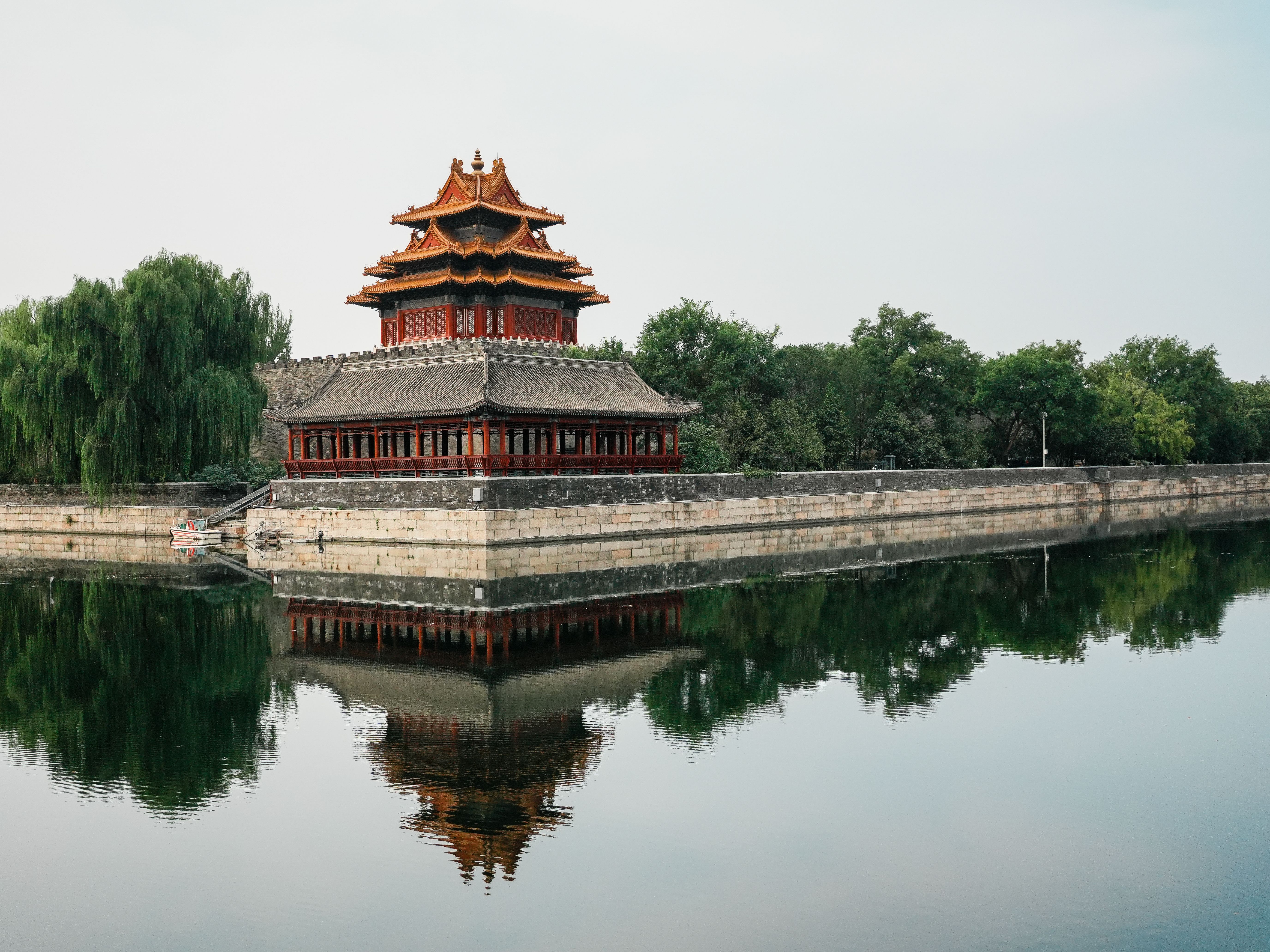
- The Forbidden City, the former imperial palace, is a maze of red walls, golden roofs, and ceremonial courtyards that once housed China’s emperors. Give yourself several hours to properly explore its halls and gardens.
- The Temple of Heaven offers a quieter, more meditative counterpoint — this is where emperors once came to pray for good harvests, and its circular architecture is considered a masterpiece of ancient design.
- The hutong neighborhoods round out the Beijing leg with a dose of everyday life: narrow alleyways, courtyard homes, and a slower pace that contrasts beautifully with the grandeur of the palaces.
{Explore Beijing at Getyourguide}
Days 4–5: Xi’an — Home of the Terracotta Army

A high-speed train whisks you south to Xi’an, once the eastern terminus of the Silk Road and one of China’s four great ancient capitals.
- The high-speed train to Xi’an is itself worth experiencing — China’s rail network is famously fast, comfortable, and efficient.
- The undisputed highlight is the Terracotta Army, the thousands of life-sized clay soldiers buried to guard the tomb of China’s first emperor. Standing above the excavation pits and seeing row after row of individually crafted warriors is one of those travel moments that photos simply can’t capture.
- The Ancient City Wall encircling Xi’an’s old town is one of the best-preserved city walls in China — renting a bike and riding along the top of it is a popular and memorable way to see the city from above.
{Explore Xi’an at Getyourguide}
Days 6–7: Chengdu — Pandas, Spice, and Slow Afternoons

A short flight brings you to Chengdu, capital of Sichuan province and one of the most laid-back, food-obsessed cities in China.
- The Giant Panda Research Base is the main draw, giving visitors an up-close (and ethically-minded) look at China’s most beloved animal in a setting designed to mimic their natural bamboo habitat.
- Sichuan cuisine is the other reason people fall in love with Chengdu — expect fiery hot pot, mouth-numbing mapo tofu, and dan dan noodles that redefine what “spicy” means.
- Tea houses and parks capture the city’s unhurried rhythm. Chengdu locals treat tea-drinking as a leisurely social ritual, and spending an afternoon in a park sipping tea and watching a game of mahjong is essential to understanding the city’s character.
{Explore Chengdu at Getyourguide}
Days 8–10: Zhangjiajie — Real-Life “Avatar” Mountains

From Chengdu, a flight takes you into one of China’s most visually dramatic landscapes.
- Zhangjiajie National Forest Park is a UNESCO World Heritage Site famous for its thousands of towering sandstone pillars wrapped in forest and mist.
- These are the so-called “Avatar” mountains — the otherworldly rock formations that reportedly inspired the floating Hallelujah Mountains in James Cameron’s film. Walking among them in person, it’s easy to see why.
- The glass bridge viewpoints, including some of the highest and longest glass-bottomed skywalks in the world, offer a thrilling (and slightly terrifying) way to take in the scenery from above the canyon floor.
{Explore Zhangjiajie at Getyourguide}
Days 11–13: Shanghai — China’s Glittering Metropolis

The itinerary shifts gears entirely with a flight to Shanghai, China’s most cosmopolitan city and a showcase of just how fast the country has modernized.
- The Bund is the classic starting point — a riverside promenade lined with colonial-era architecture on one side and the futuristic skyline of Pudong, including the iconic Oriental Pearl Tower, glittering on the other.
- Yu Garden, a classical Chinese garden tucked into the middle of the old city, is a peaceful escape surrounded by traditional teahouses and bustling market streets.
- The French Concession neighborhoods offer tree-lined streets, boutique shopping, and some of the city’s best café and restaurant scenes — a completely different mood from the skyscraper districts.
- For sweeping views, heading up the Shanghai Tower puts the entire scale of the city into perspective, especially at sunset when the skyline starts to light up.
{Explore Shanghai at Getyourguide}
Day 14: Suzhou Day Trip — The Venice of the East

A quick high-speed train ride from Shanghai brings you to Suzhou, a city renowned for over a thousand years for its classical gardens and canals.
- Suzhou’s classical Chinese gardens — many of them UNESCO-listed — are masterworks of landscape design, blending rockery, water, and architecture into miniature dreamscapes.
- The canal-side streets and historic bridges give the city its nickname as the “Venice of the East,” with whitewashed houses and arched stone bridges reflecting in the water.
{Explore Suzhou at Getyourguide}
Day 15: Hangzhou Day Trip & Departure

The trip closes with one more day excursion, this time to Hangzhou, a city celebrated throughout Chinese history and poetry for its natural beauty.
- A final high-speed train to Hangzhou brings you to the shores of West Lake, arguably the most romanticized body of water in Chinese culture.
- A West Lake boat ride lets you drift past willow-lined shores, causeways, and small islands that have inspired poets and painters for a thousand years.
- Scattered around the lake are historic pagodas and lakeside temples, offering a final taste of the spiritual and artistic heritage that runs through the entire trip.
- From here, it’s back to Shanghai for the international departure, closing the loop on a journey that spans nearly the full breadth of Chinese civilization — imperial, natural, culinary, and modern.
{Explore Hangzhou at Getyourguide}
Why This Route Works
What makes this itinerary so effective is its rhythm: grand historical sites in Beijing and Xi’an, a relaxed cultural interlude in Chengdu, a dramatic natural detour in Zhangjiajie, and a finale that moves from ultra-modern Shanghai to the classical beauty of Suzhou and Hangzhou. It’s a route that touches nearly every facet of what makes China such a compelling destination, without trying to cram in more than is comfortably possible in two weeks.
Practical tips for planning this route:
- Book high-speed train tickets and domestic flights in advance, especially during Chinese public holidays when demand spikes.
- Pack layers — you’ll move between the dry north, humid Sichuan basin, misty mountain terrain, and coastal cities, all with different microclimates.
- A tour guide or app-based translator is worth having for Zhangjiajie and rural stretches where English signage is limited.
- Leave a little flexibility in the schedule; both Shanghai and Beijing reward an extra half-day of aimless wandering.
Fifteen days, six regions, thousands of years of history — this itinerary is a whirlwind, but it’s the kind that leaves you already planning your next trip back.
Leave a Reply